I confess I went to the Netherlands with one fixed idea: to see real windmills. Not the ones on postcards or fridge magnets, but windmills that still turn, creak and work. I came back with that and quite a bit more: a craftsman who turns a log into a clog in a couple of minutes, a fishing harbor that smells of the sea, and an island of green wooden houses where time seems to have stood still.
Zaanse Schans, Volendam and Marken are less than an hour from Amsterdam and fit comfortably into a single day. In this guide I'll tell you how to combine them, the best time to arrive at each one, how to get from one to the next, and what to photograph in each village.
Amsterdam has enough canals, museums and bicycles to fill an entire week. But the Netherlands of windmills, dikes and fishing villages lies outside, just a few kilometers away, in the region surrounding the former Zuiderzee.
The good news is that all three villages lie along the same route. Zaanse Schans is northwest of the city; Volendam and Marken are to the northeast, half an hour apart by ferry. With a little planning, you can see all three without rushing and be back in Amsterdam before dinner.
Zaanse Schans is a neighborhood on the banks of the Zaan river where 18th- and 19th-century windmills, houses and workshops were brought together. It isn't a village frozen in time for tourists: several windmills still grind spices, saw timber or press seeds for oil, just as they did two centuries ago.
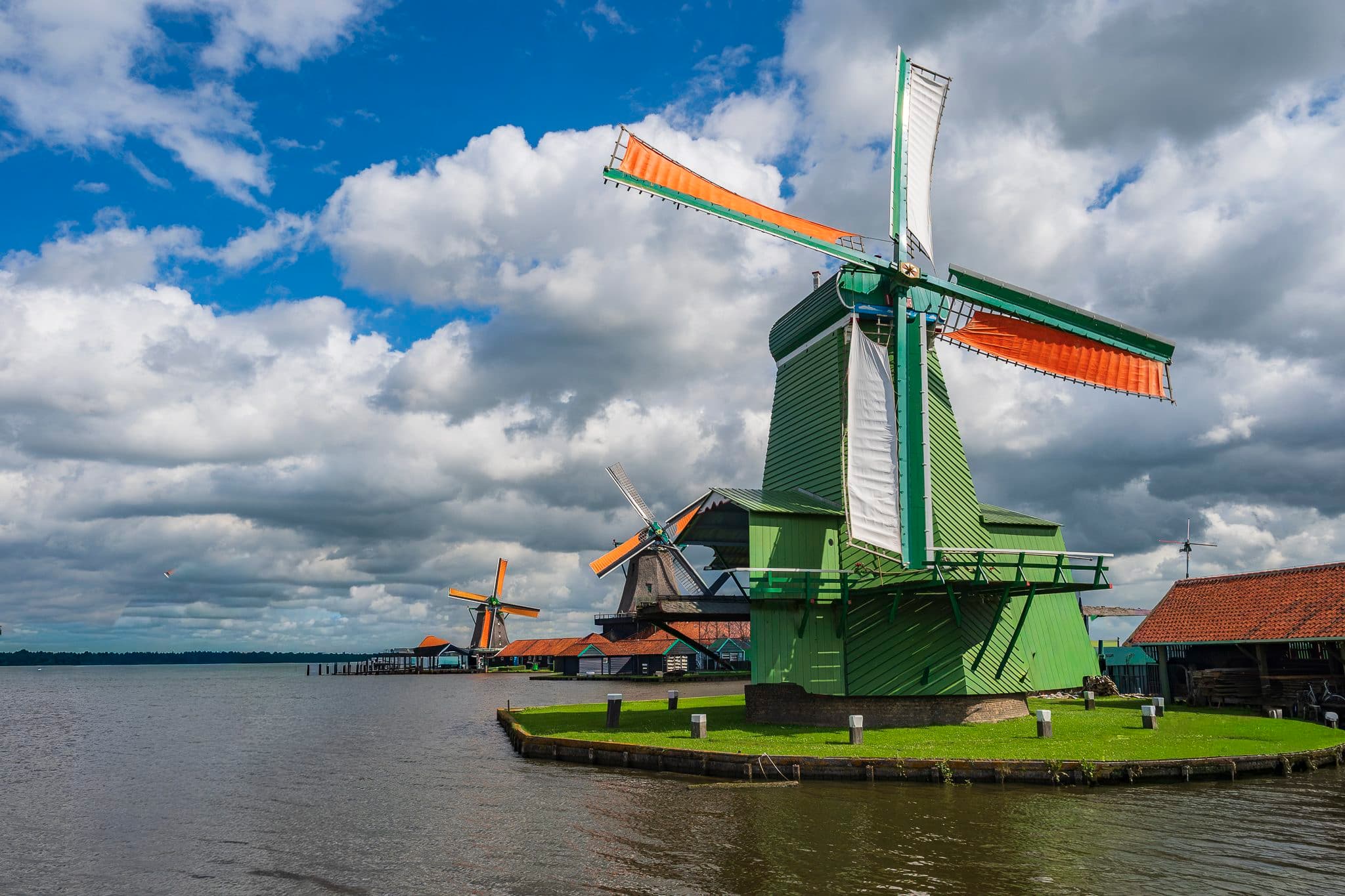
The first one I saw was a green windmill, standing on a small grassy island in the river, its sails outlined against a sky of enormous clouds. That's the cover photo of this post, and it's the one I found hardest to stop taking.
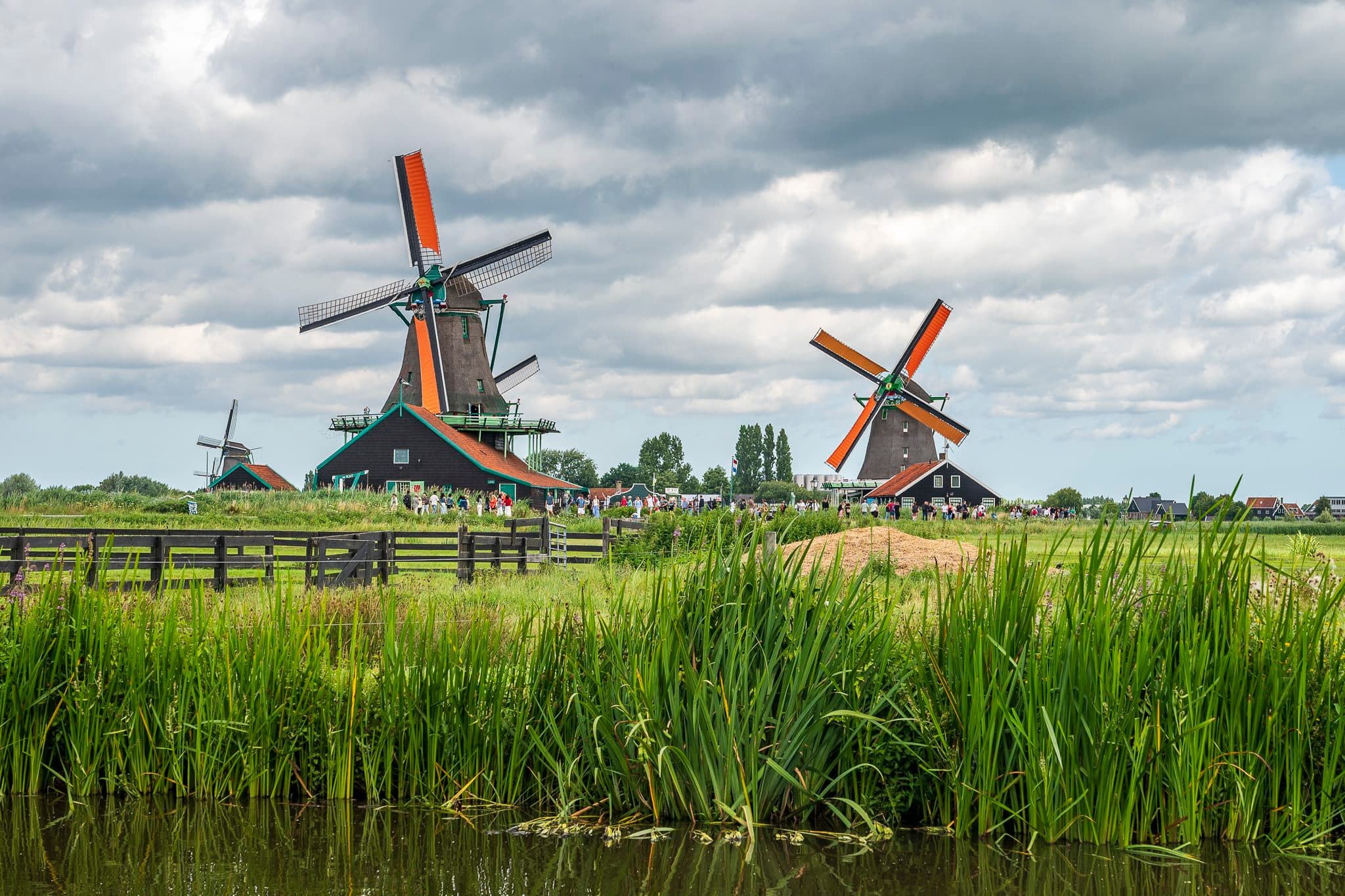
Getting there: a Sprinter train leaves Amsterdam Centraal every 15 minutes for Zaandijk Zaanse Schans station. It's a 17-minute ride followed by a walk of about 10 minutes, across a wooden bridge.
What it costs: walking around the village is free, and so is visiting the clog factory and the cheese farm. There's a fee to go inside each windmill and the Zaans Museum; a combined card covering several of them is available.
When to go: before 11 a.m. or after 3:30 p.m. In between, the tour buses arrive and the paths fill up.
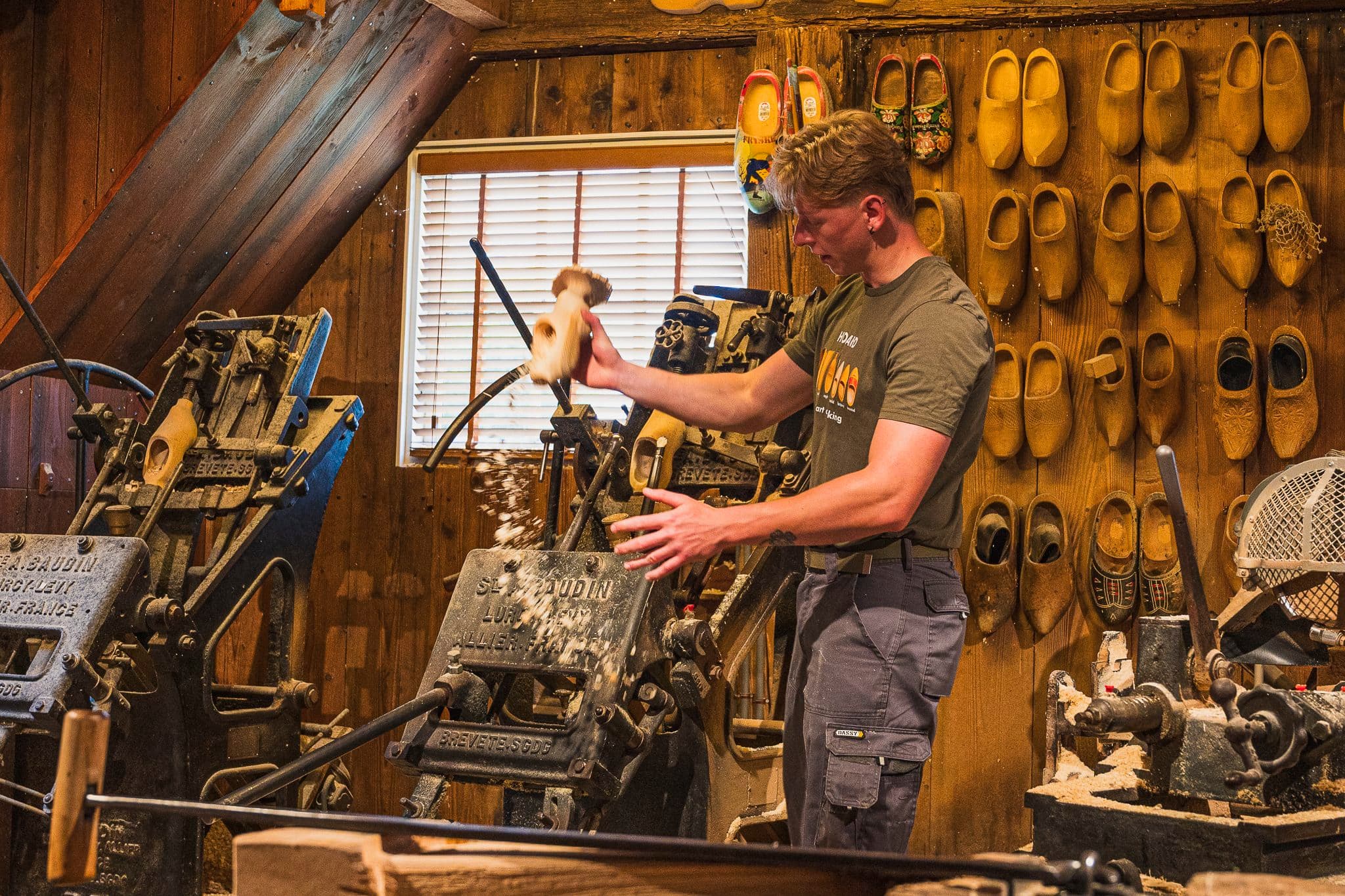
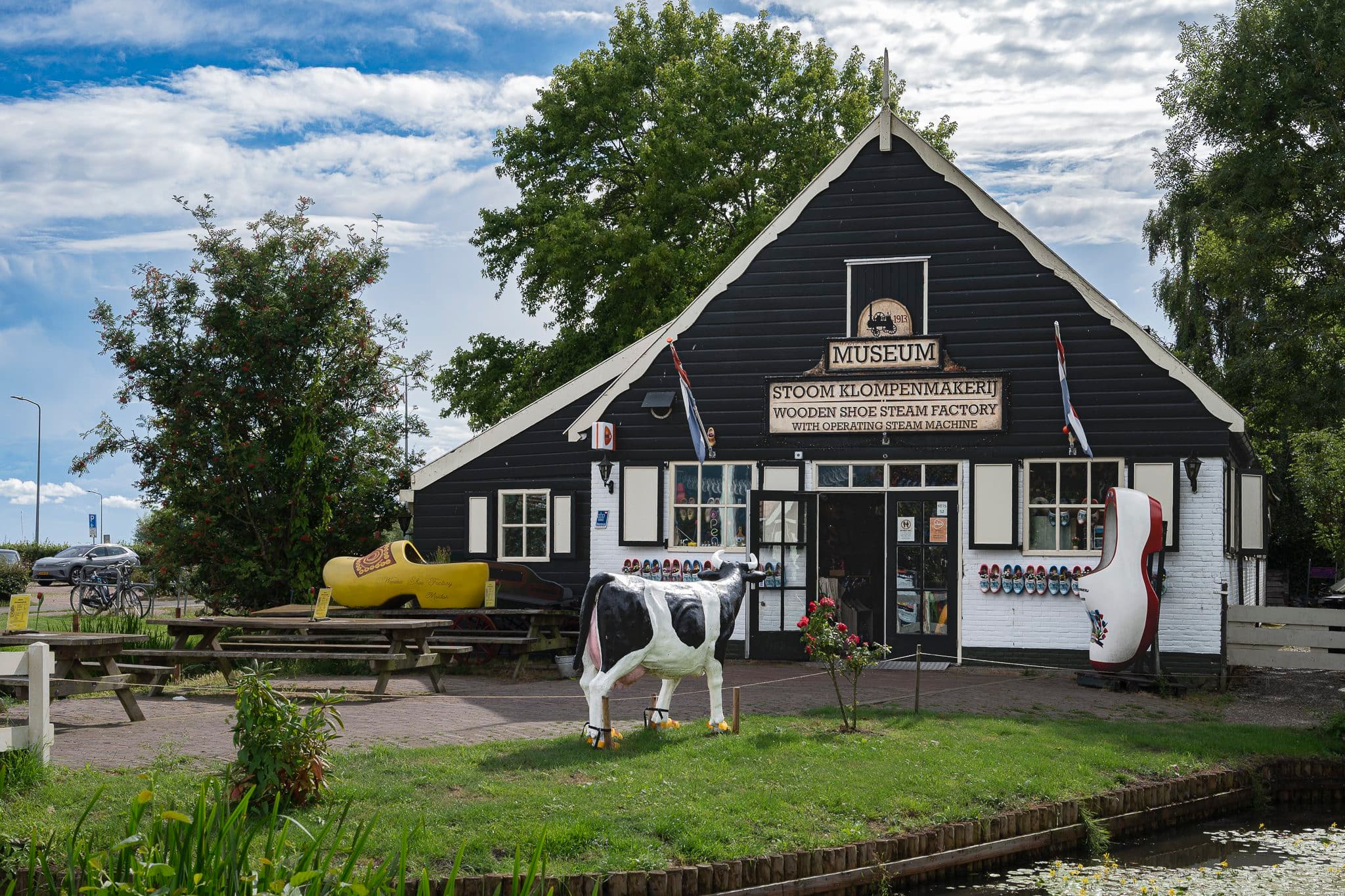
In the clog workshop, a craftsman works right in front of you on an old machine: in minutes, a block of poplar wood becomes a clog amid a shower of wood shavings. Afterwards you can browse the collection: clogs hand-painted with windmills and flowers, bridal clogs, work clogs. At the cheese farm you can taste local cheeses.

What to photograph:
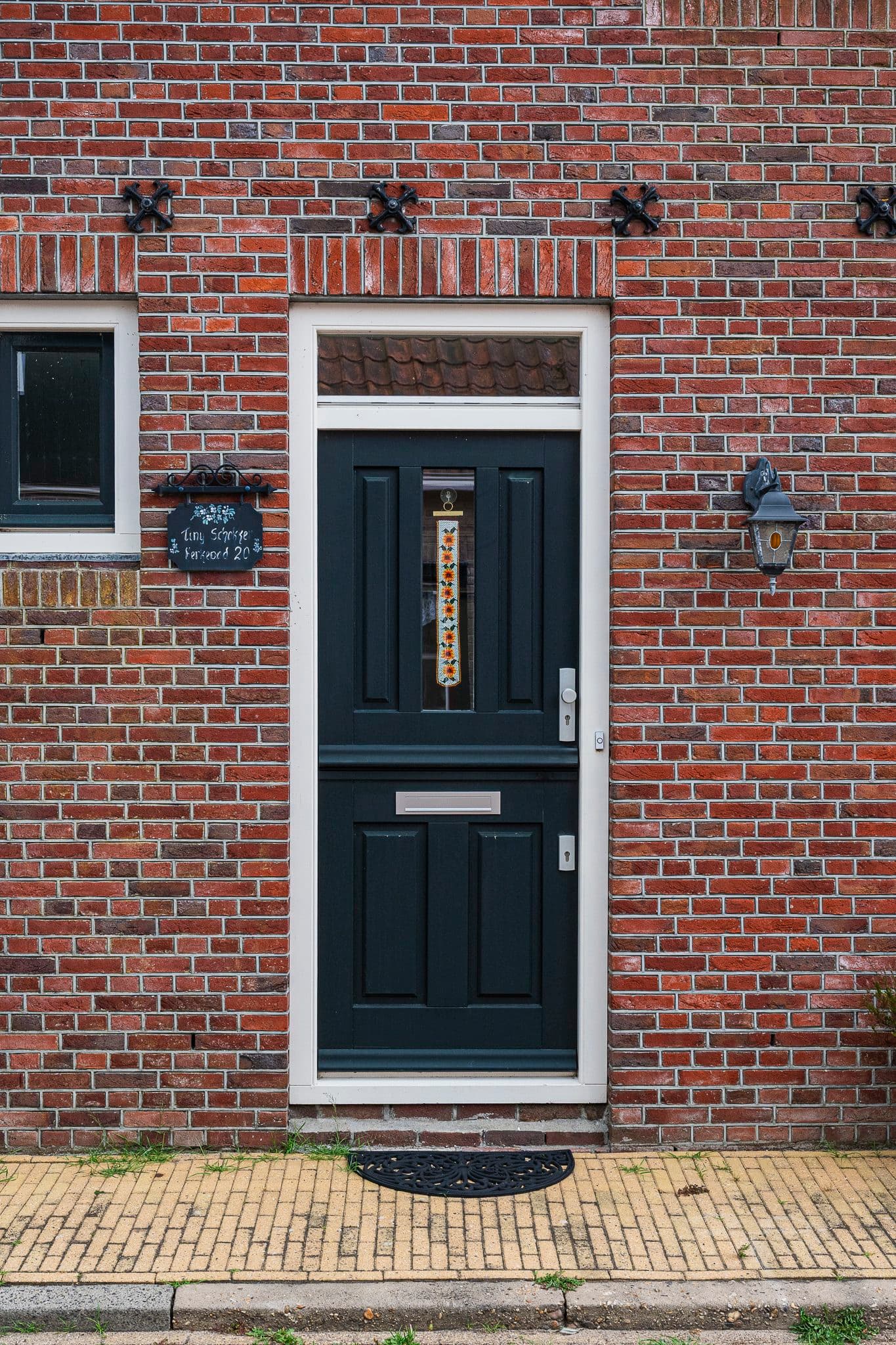
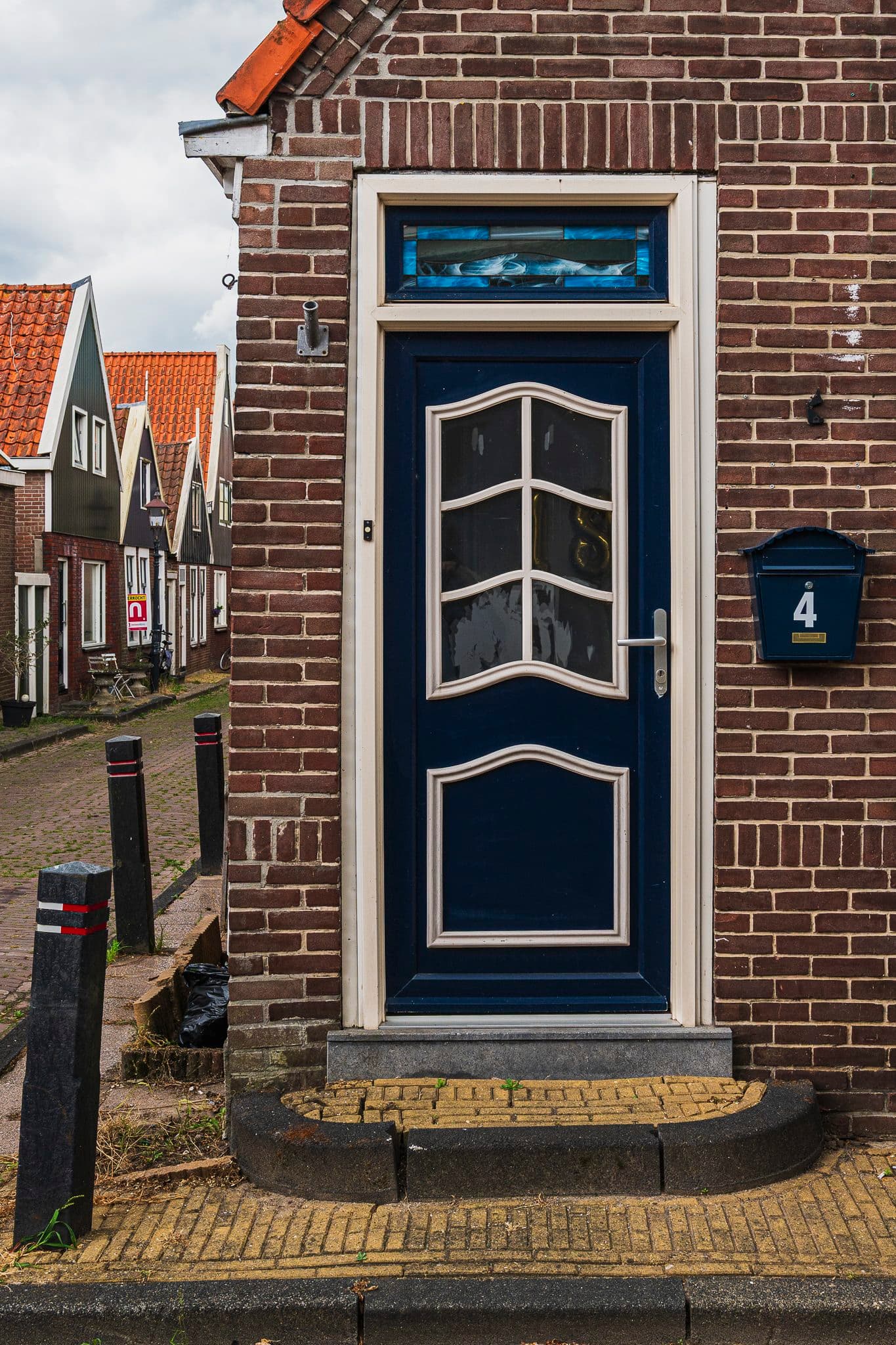
Volendam is a fishing village facing the Markermeer, the lake left behind when the former Zuiderzee was closed off. It has a harbor full of boats, a waterfront lined with fish stalls, and brick streets with narrow gabled houses.
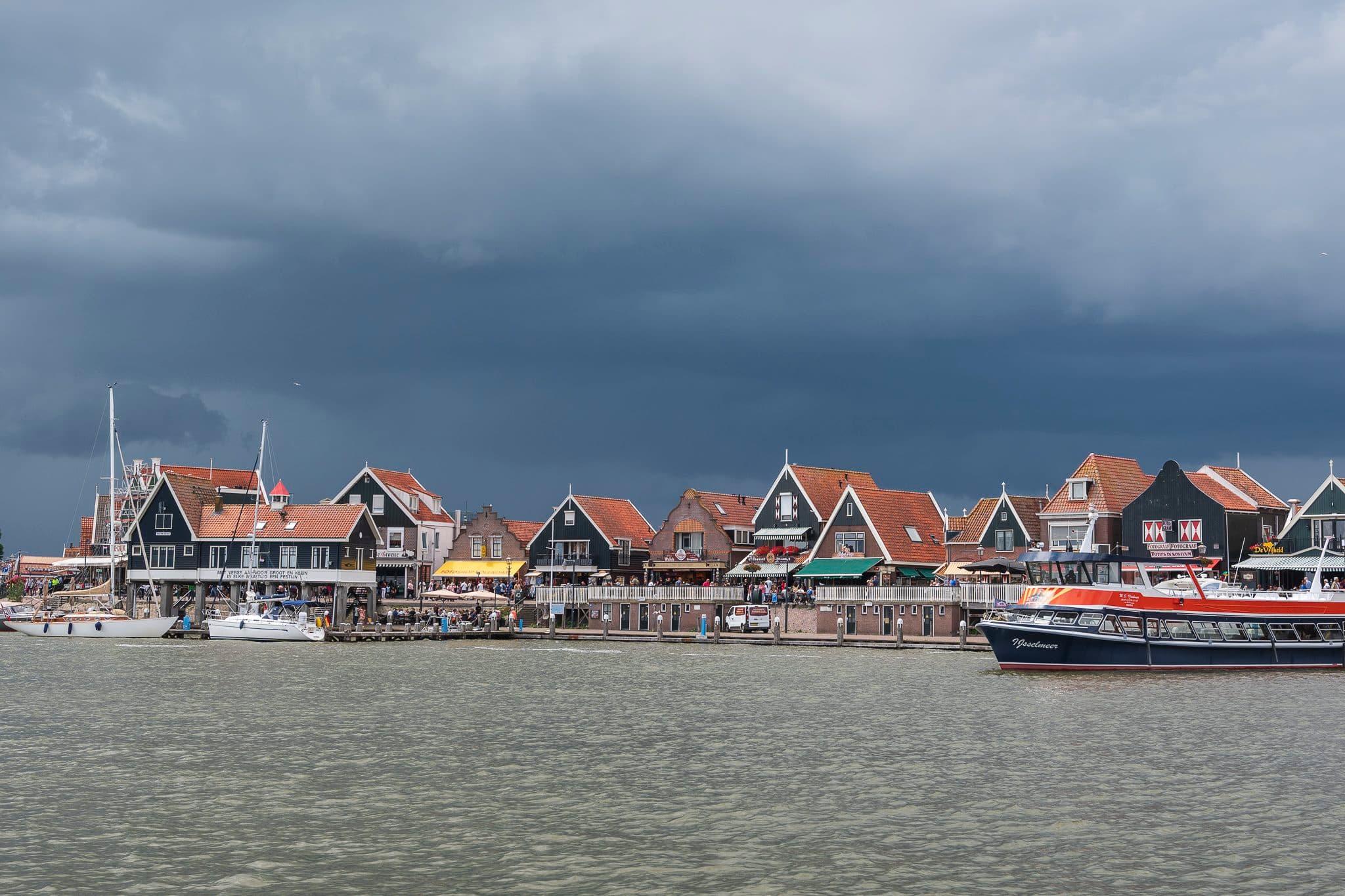
By the time I arrived, the sky had changed its mood: dark clouds over the water and light that came and went. For photography, a stroke of luck.
It's the ideal place for lunch. The signature dish is herring, but along the waterfront there's fried fish and sandwiches for every taste.
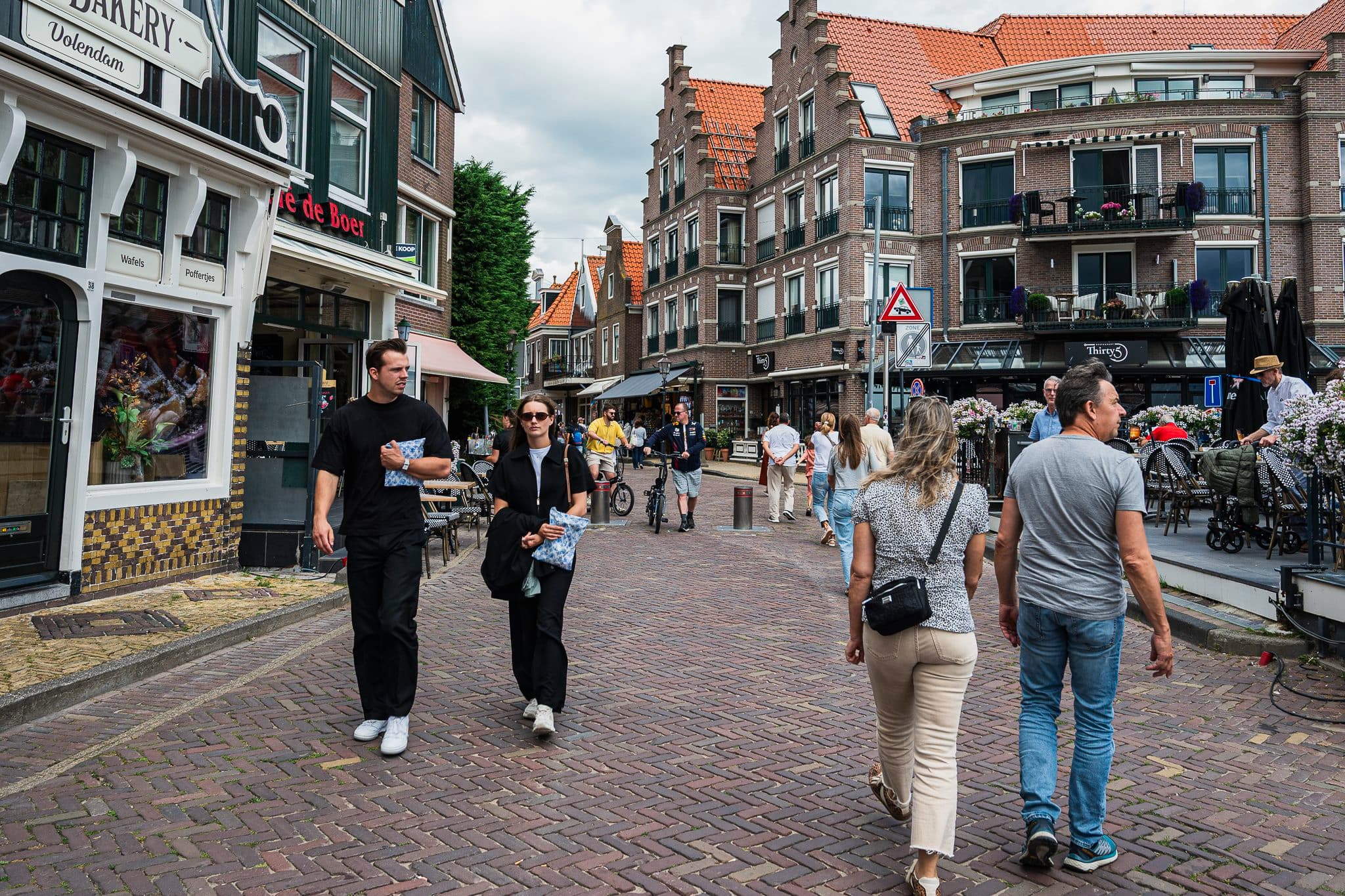
Getting there on your own: bus 316 runs from Amsterdam Centraal to Volendam. From Zaanse Schans, it's best to take the train back to Amsterdam and catch the bus from there.
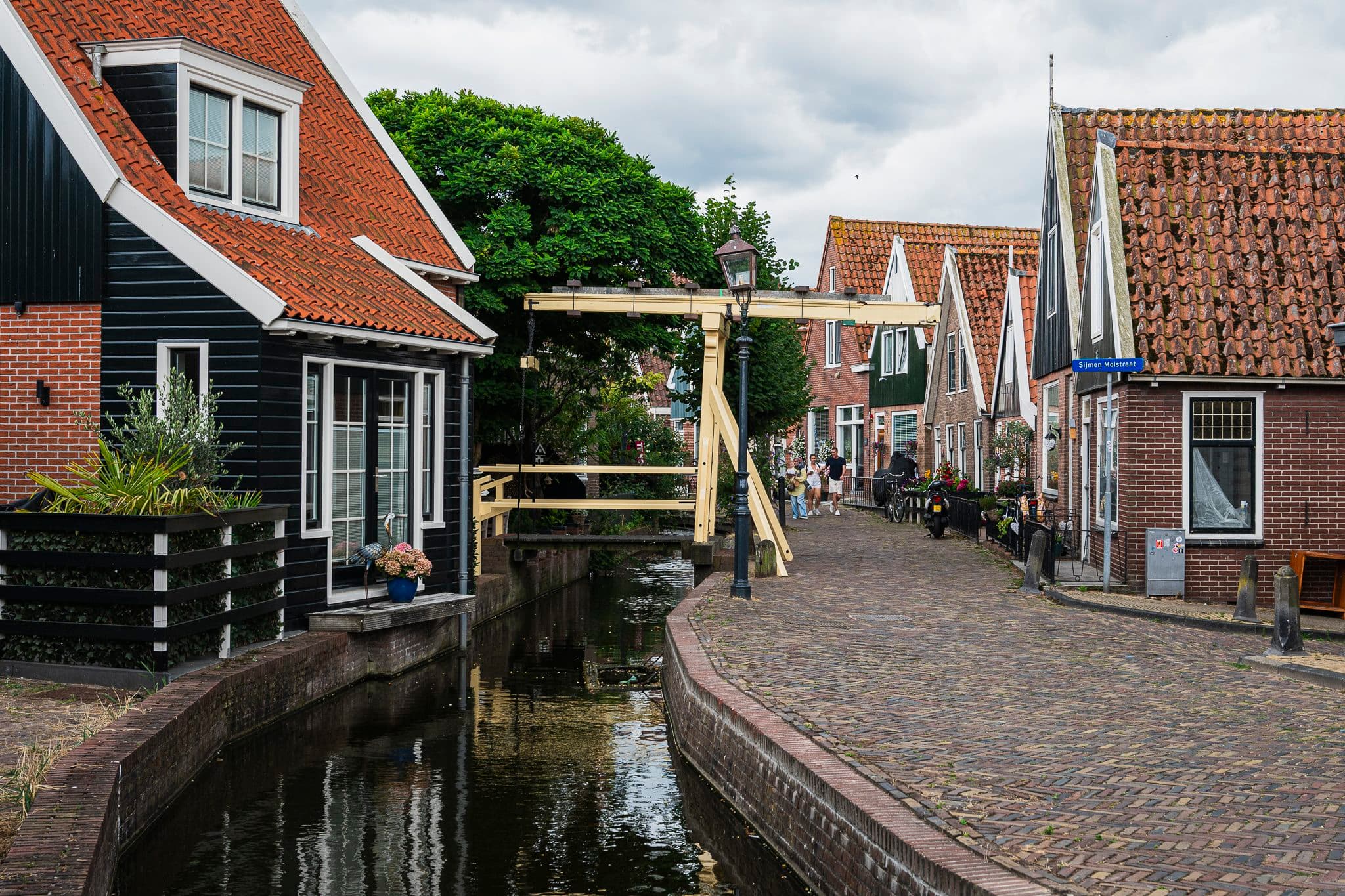
What to photograph:
The Marken Express connects the two villages in a 30-minute crossing. In high season it departs every 45 minutes from 10:30 a.m., and the last boat leaves at 7 p.m. Timetables change with the seasons, so it's worth checking them before you go.
The crossing itself is worth it: Volendam shrinks behind you and, on the other side, the green houses of Marken slowly come into view.
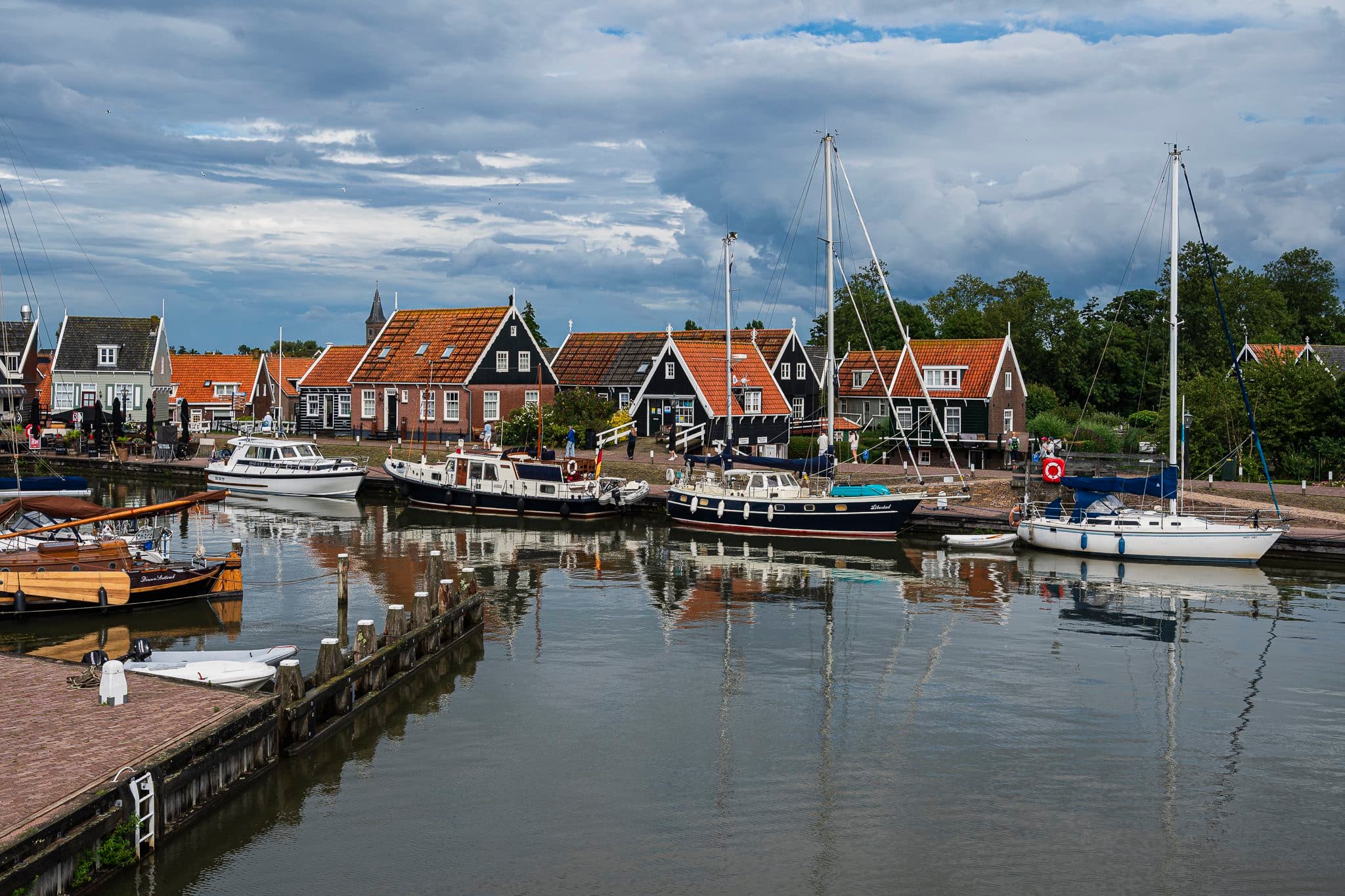
Marken was an island until the mid-20th century, when a dike joined it to the mainland. That isolation gave it a character all its own: wooden houses painted dark green, many raised on stilts to protect them from flooding, narrow canals and tiny bridges.
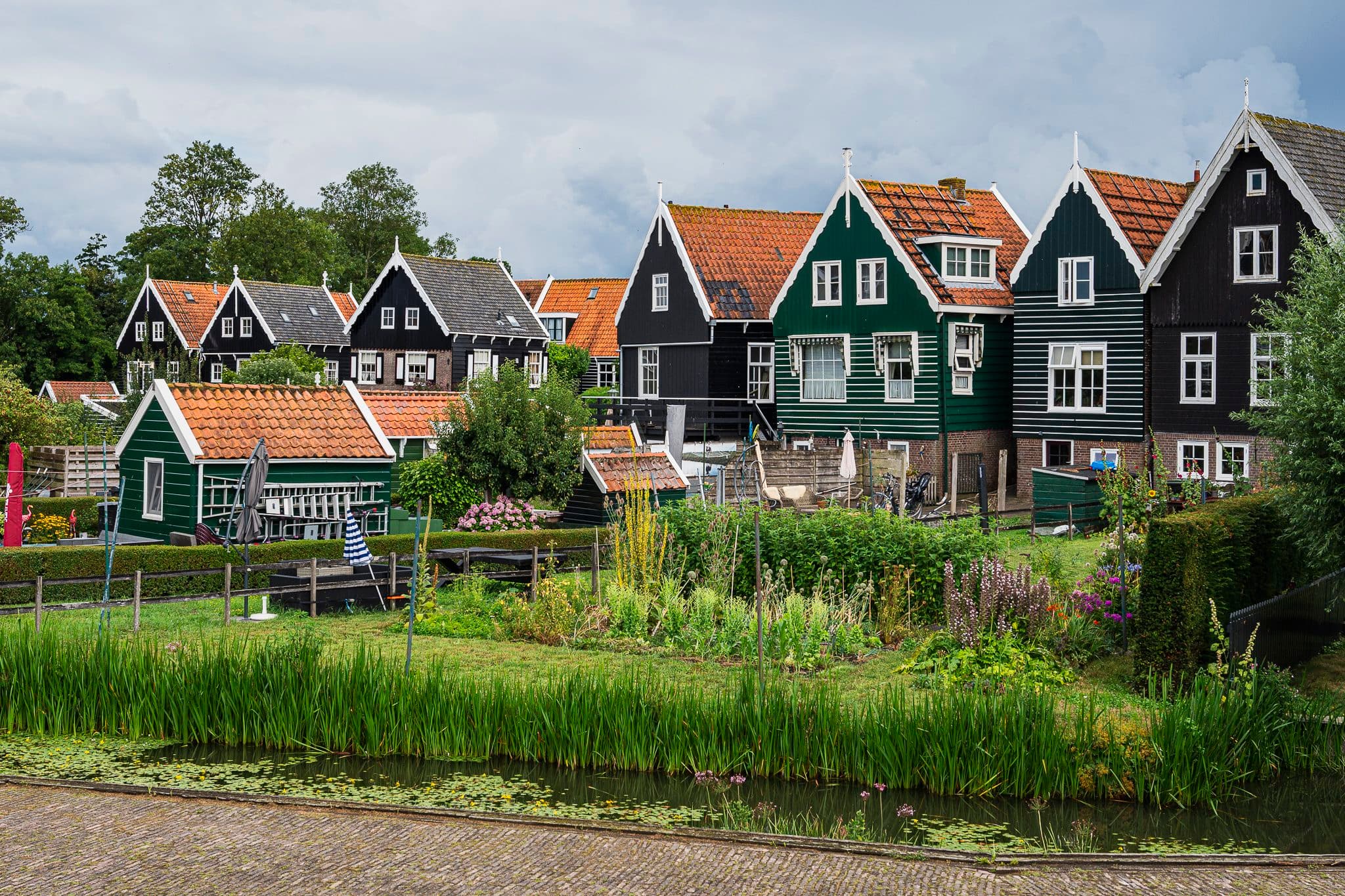
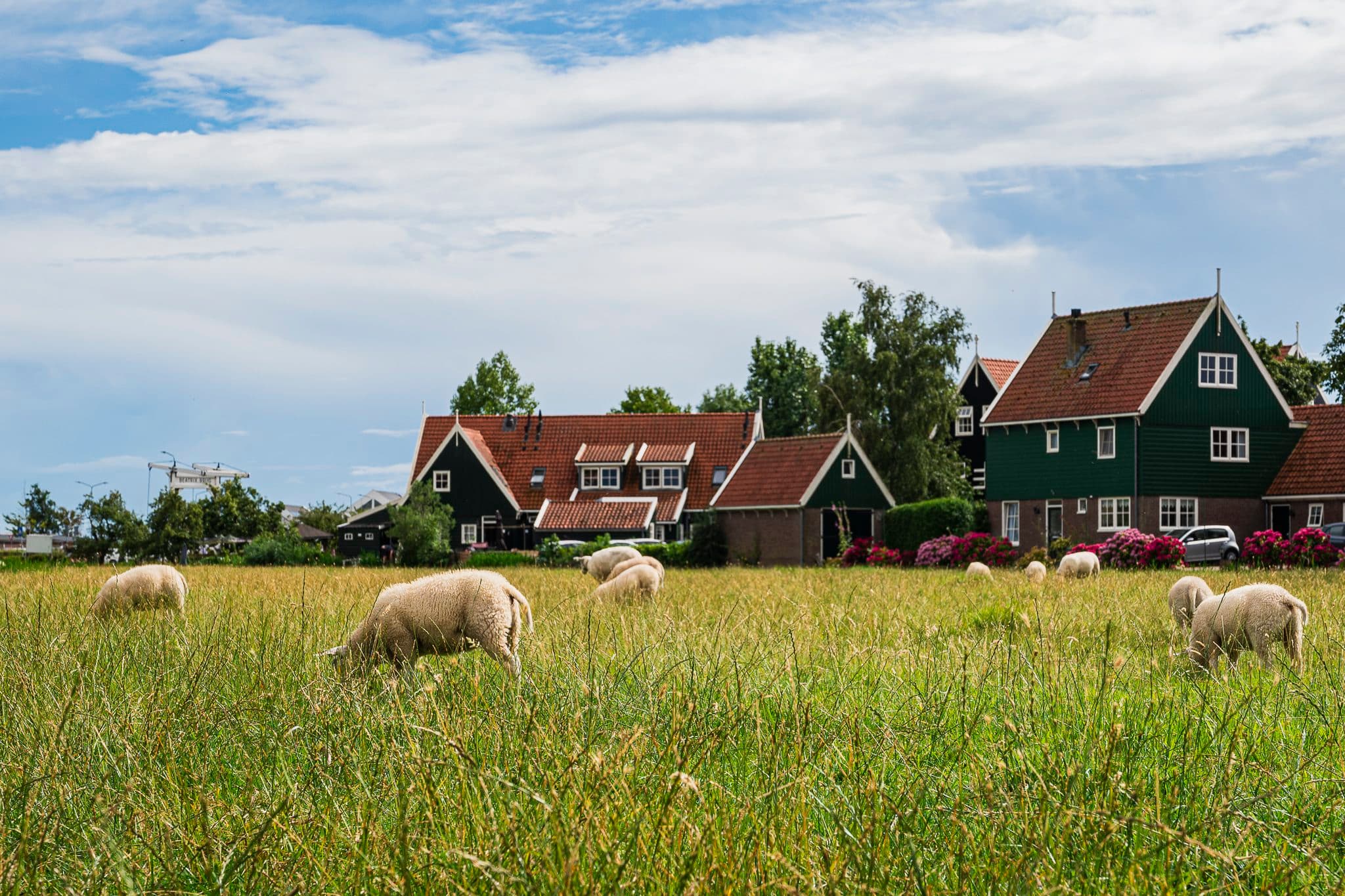
It's the quietest of the three. After the bustle of Volendam, walking through Marken among gardens and sheep grazing beside the houses feels like turning down the volume of the day.
At the tip of the island stands the Paard van Marken lighthouse, about a 40-minute walk from the harbor, if you have time.
What to photograph:
Getting back: a direct bus runs from Marken to Amsterdam Centraal.
I did the trip on a full-day tour from Amsterdam, and it was the easiest way to combine the three villages without worrying about train, bus and ferry timetables.
With a tour. The best-rated ones include the round-trip bus, a Spanish-speaking guide, and the clog and cheese demonstrations. If you want the ferry between Volendam and Marken, check that it's included: not all of them have it. Some also add Edam, the cheese town.
On your own. It's cheaper and lets you set your own pace, ideal if you're carrying camera gear and want to wait for the light. One possible order:
I returned to Amsterdam with a full memory card and the feeling of having seen, in a single day, three faces of the same Netherlands: the one that works with the wind, the one that lives off the sea, and the one that still keeps its island silence.
If you're planning your trip, save this guide. And if you like these photos, several are available as fine art prints on my Fine Art Prints page.