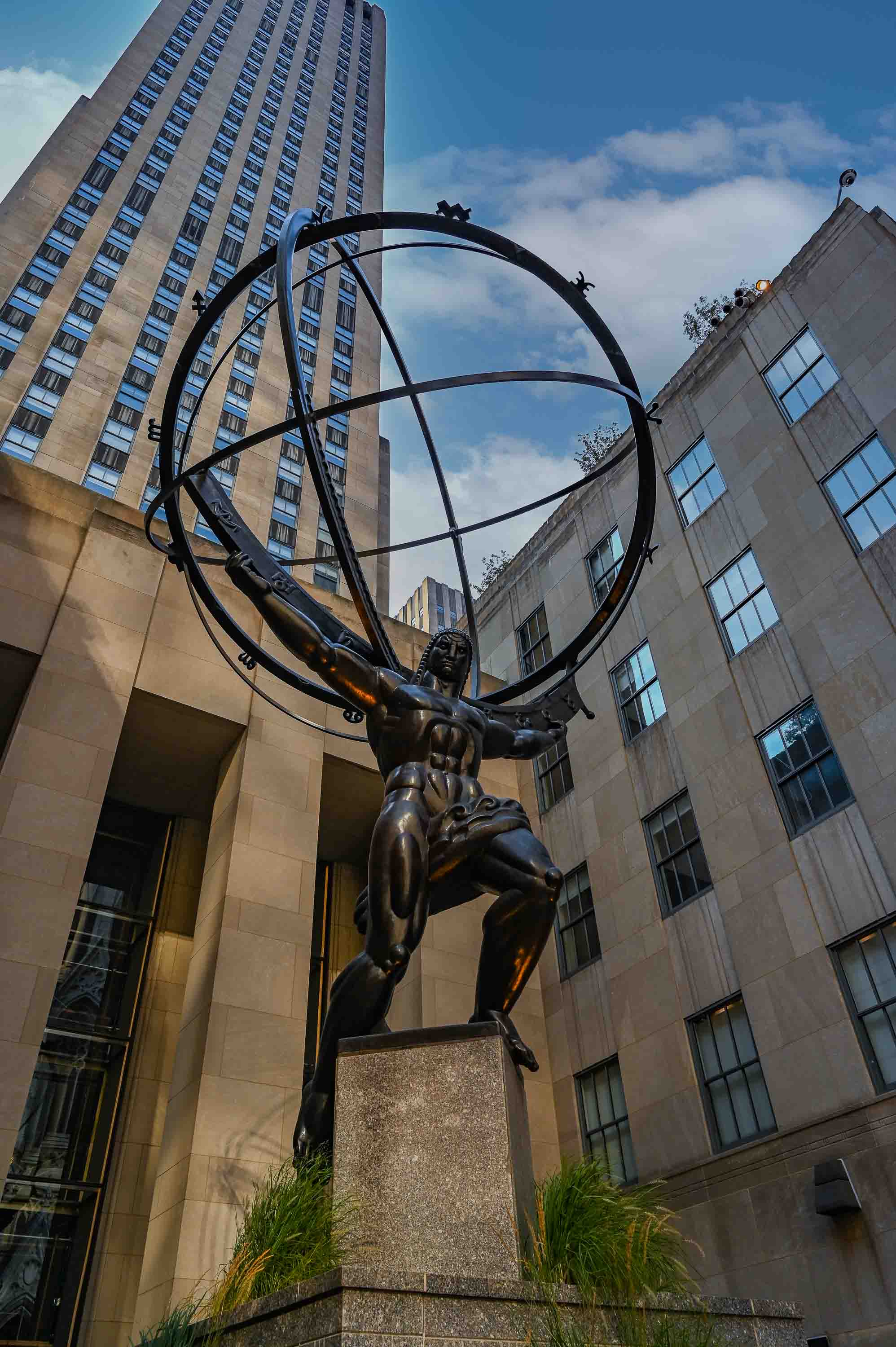
If we walk along Fifth Avenue near 50th Street, it's impossible not to stop at the entrance of the International Building at Rockefeller Center. There, guarding the entrance with his arms raised, stands Atlas, one of the most photographed sculptures in Manhattan.
This imposing bronze figure, roughly 4.5 meters tall and weighing seven tons, standing on a granite pedestal, is the work of sculptor Lee Lawrie, with the collaboration of René Paul Chambellan. It was unveiled in 1937, as part of the ambitious public art program that accompanied the construction of Rockefeller Center.
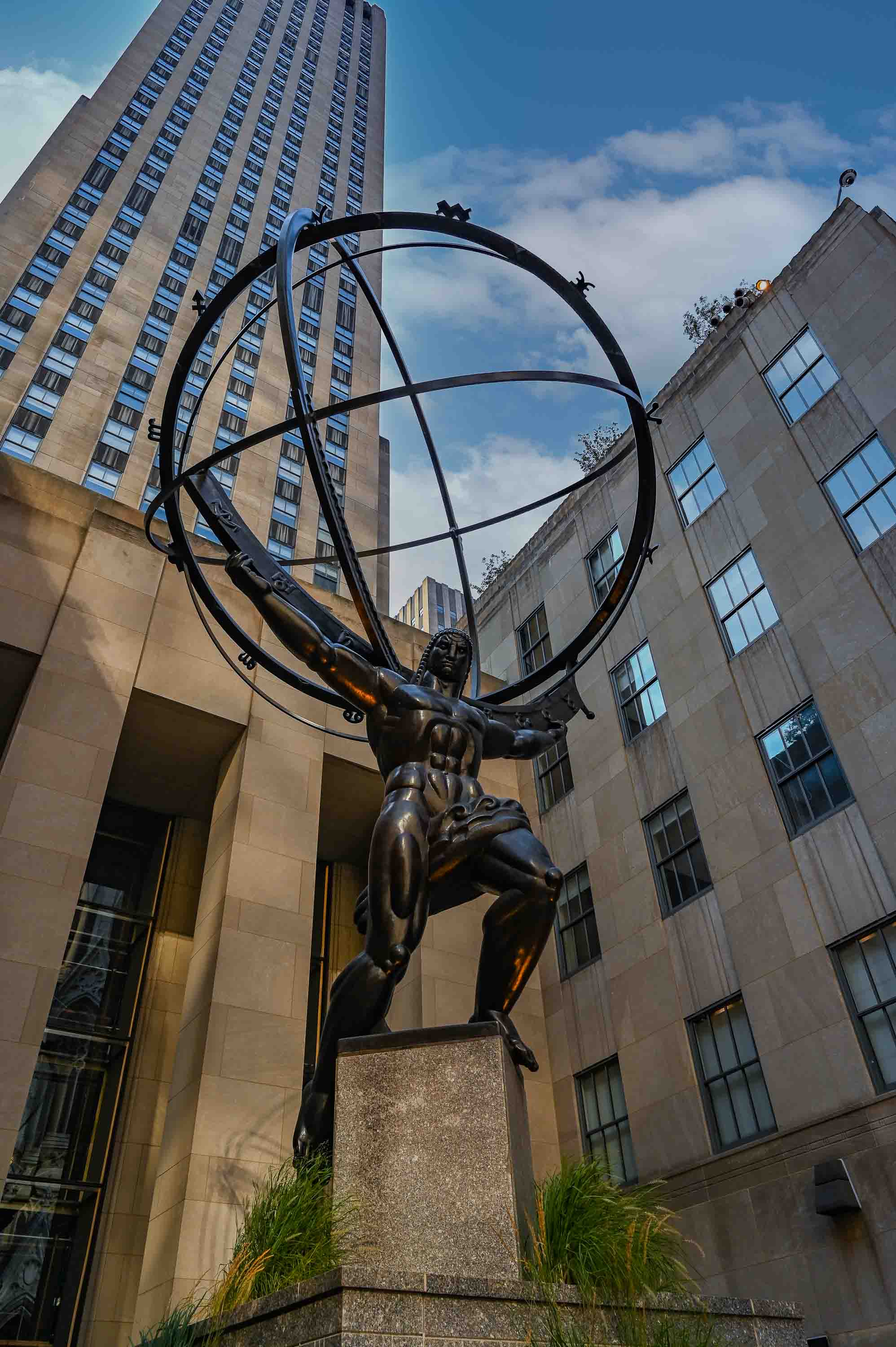
Unlike the classical depiction of the Greek titan condemned to carry the world on his shoulders, this Atlas doesn't hold up a globe, but an armillary sphere: an ancient astronomical instrument made of rings representing the movements of the heavens. The choice was no accident. It was meant to convey that modern man no longer bore the raw weight of the planet, but had instead mastered science and the knowledge of the universe, in tune with the spirit of progress celebrated by the Art Deco style of the era.
When it was unveiled, Atlas's chiseled musculature and stern expression sparked controversy. Some critics and press outlets of the time linked it to the authoritarian aesthetic then spreading from Mussolini's fascist Italy, and protests were even staged in front of the sculpture. Lawrie always denied any political intent behind his work, but the controversy remained forever tied to its history.
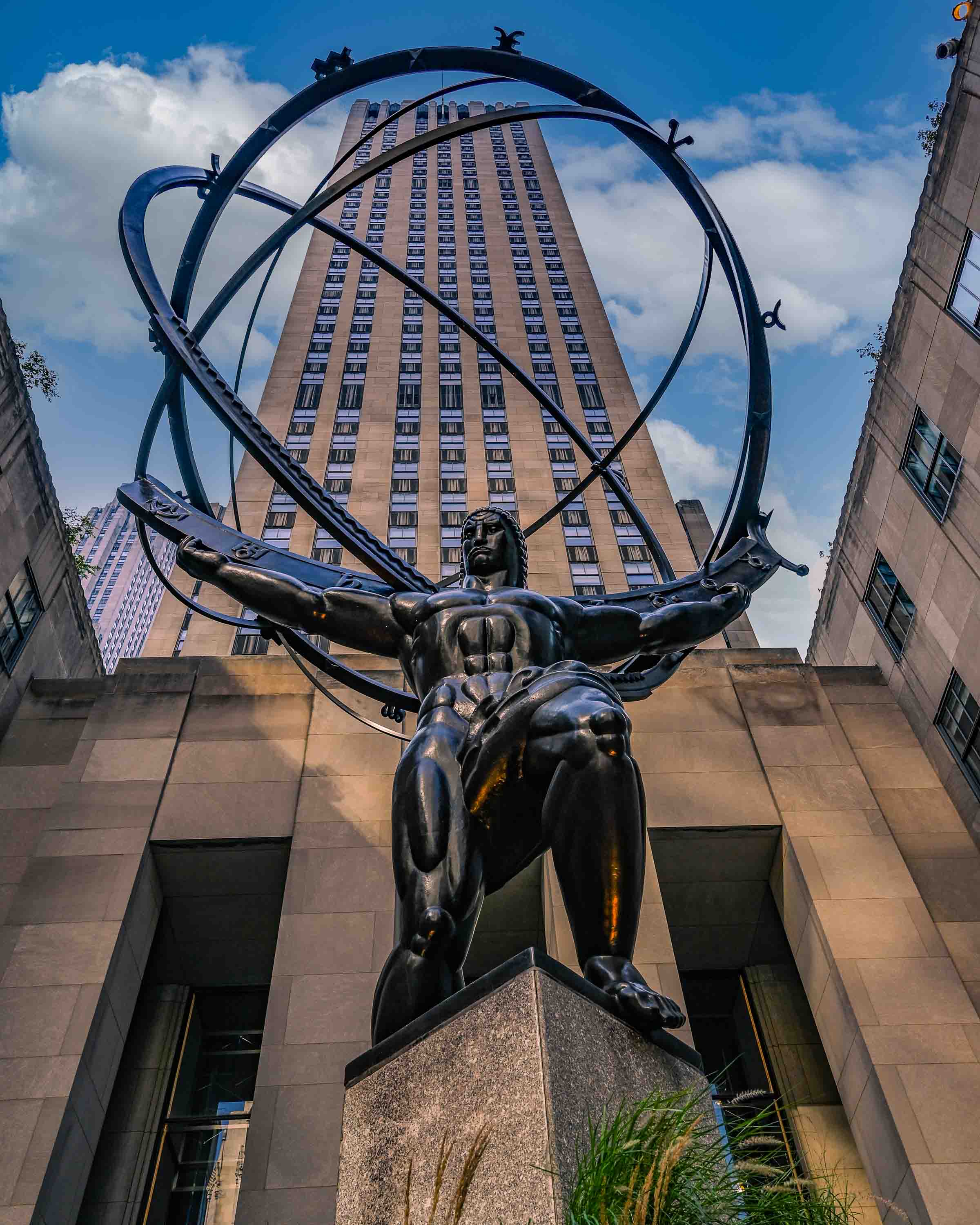
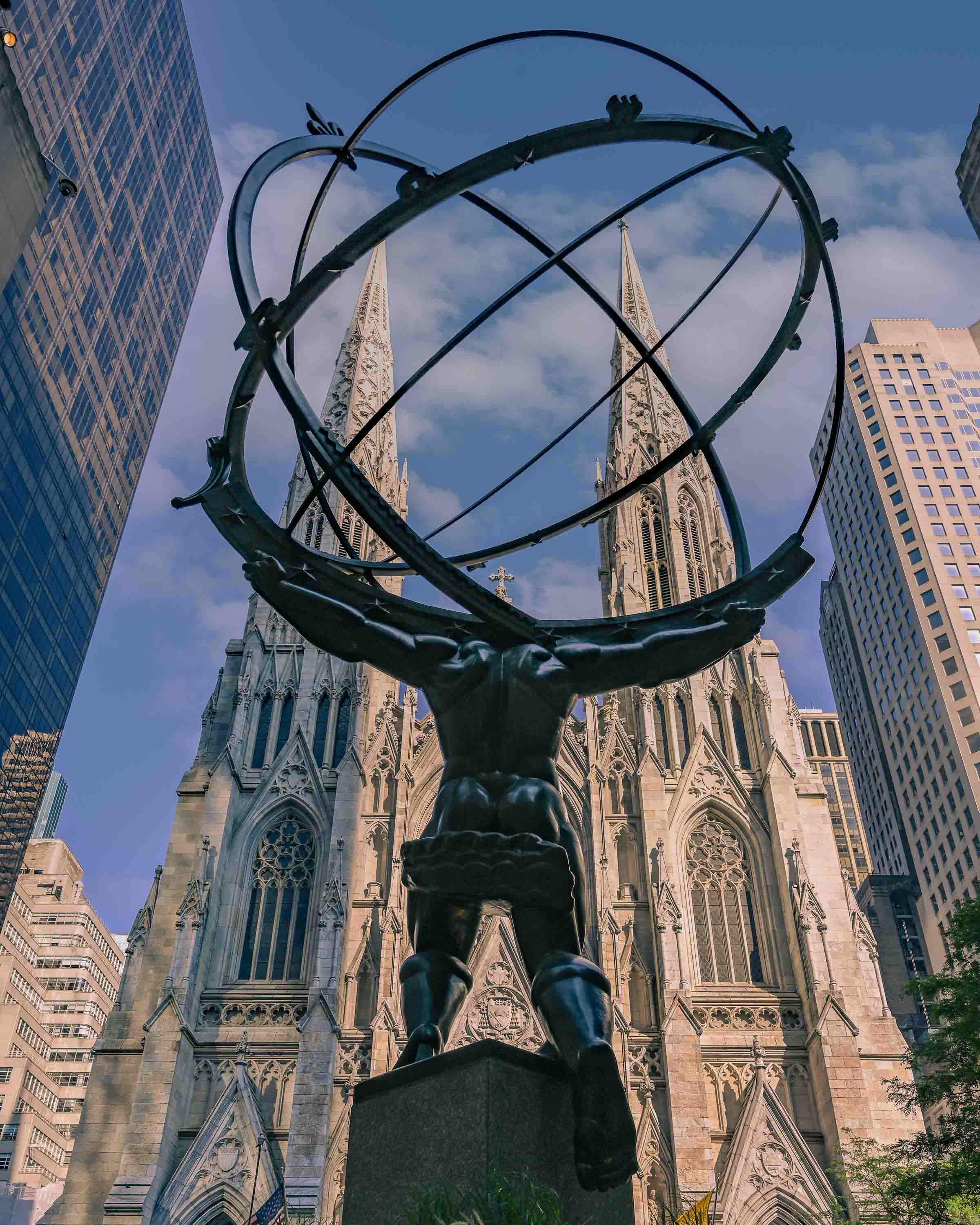
One of the details that draws visitors most is its placement: Atlas looks directly toward the Gothic spires of St. Patrick's Cathedral, across Fifth Avenue. The contrast between the secular, commercial power represented by Rockefeller Center and the spirituality of the cathedral has made this corner one of the most photographed and talked-about spots in New York.
By subway, take the B, D, F or M lines to the 47-50 Sts–Rockefeller Center station. It's also an easy walk along Fifth Avenue, between 49th and 50th streets.